By Michael B. Fortney, Ph.D.
Rarely have there been two professions as complementary as the military and law enforcement. While there could be endless discussions about the differences between these occupations, their many corresponding characteristics include both tangible and intangible qualities, especially in the realms of training, education and joint operations. These facts are especially true when individuals serve in both occupations simultaneously and can utilize their abilities in both capacities. Whether in operations or administration, the experience and education they possess is invaluable and should serve as a force multiplier for both organizations — if the organizations can recognize and capitalize on these skill sets.
What agency doesn’t like free training or someone who has already been trained? In a time when budgets are being decreased, the training line item is normally one of the first areas to suffer. The effects of these budget cuts will be felt in a failure to recruit and retain quality personnel, deteriorating equipment and many other problems. Administrators are all too familiar with these challenges. For these reasons, state legislation and departmental policies need to be developed to recognize applicable training received during military service. While some law enforcement agencies do recognize similar training from military personnel, not all agencies do.
In 2009, the International Association of Chiefs of Police worked with the United States Department of Justice’s Bureau of Justice Assistance to enhance understanding of the recent experiences of combat veterans as they transitioned into the law enforcement profession. The results of this research were published in a document titled “Employing Returning Combat Veterans as Law Enforcement Officers,” which listed some intangible qualities that law enforcement administrators identified as making military personnel ideal law enforcement candidates. These include:
+ Physical abilities/conditioning
+ Firearms training
+ Leadership experience
+ Combat experience
+ Respect for discipline and authority
+ Experience working with/in culturally/ethnically diverse groups
While it is true that most military personnel have received extensive training and have some experience in these areas, the need for constant and enhanced education is vital to remaining relevant in both professions. Too often military personnel can become myopic with their experience and revert back to phrases such as “This is the way we did things in my military unit…” While there are mutual processes that both professions utilize, military personnel need to ensure that they effectively translate their experience into the law enforcement realm.
 DUAL ASSET
FOP member Adam Rosenberg (Connecticut Lodge #33), a lieutenant with the Navy Reserves and a trooper first class/detective with the Connecticut State Police, says that having both military and law enforcement experience has significantly enhanced his leadership skills and expanded his professional network.
“My experience in the state police taught me about operational security, terrorism, human trafficking, intelligence and counterintelligence methodologies, among other topics,” he explains. “After receiving my commission in the Navy, I realized the experiences and education in my law enforcement career were of similar concern to the military. Both agencies are working toward the same objectives and I didn’t realize it. These topics are not mutually exclusive to one profession, so I became more of an asset to the military already understanding the application of these principles in the real world.
“Likewise, after I was in the military for a while I started to realize how many law enforcement officers were also in the military,” Rosenberg continues. “This fact alone exponentially broadened my professional and personal networking capabilities. I made friends who I can immediately call and get their assistance on a case. Additionally, my experiences in leadership positions and additional education has made me a more valuable asset to my civilian employer.”
One way to help bridge the knowledge gap between law enforcement and the military professions is through education. This can be accomplished through formal academic institutions or joint academies that are open to both professions. While some training is not recognized between the professions, a formal education through an accredited institution is almost always beneficial and recognized by all.
Historically, law enforcement was not considered a true profession, so to speak, because there were no educational requirements. In turn, those who served in law enforcement were never viewed as well-educated. While there is not an educational requirement across all organizations for hiring or retention, law enforcement officers have evolved to become more educated than ever before. One can find officers throughout the ranks who hold various college degrees in business, psychology, sociology and law. Some agencies assist their officers with advancing their education, while others are not financially able to. Military service members, especially commissioned officers, hold advanced and terminal degrees. If a law enforcement agency wants formally educated officers, commissioned military officers fulfill that need at no extra cost to the agency.
When it comes to joint educational opportunities, one of the premier educational opportunities for law enforcement and military professionals to take advantage of is the Federal Bureau of Investigations National Academy. This is a highly selective course that invites national and international law enforcement and military personnel for education in leadership, law, behavioral science, etc. It is an invaluable environment where personnel from both professions can share experiences and learn from each other through an extensive network of professional and personal relationships. This educational opportunity also extends into the classrooms of local schools and adjunct professors at universities, some of whom may even have retired from the military and law enforcement to teach full time. Who better to return to the classroom to teach and share their real-world experiences with students than those who have lived both lives? Not too bad of a recruitment and retention tool, huh?
 CROSS-TRAINED
FOP member David Wolford (West Virginia Lodge #69), a major serving in the West Virginia National Guard as the State Antiterrorism and Force Protection officer who is also a sergeant with the Fairmont Police Department, describes his experiences: “Over the years the military has worked closely with county and state law enforcement agencies throughout West Virginia during annual civil security drills. The training has always been productive and beneficial to all levels of participating agencies. However, there is always the need to continuously train because of constant changes and challenges that face every jurisdiction. Having nearly 40 years of combined military and law enforcement experience, I’ve used my experience and education in the military to gain a better understanding of all levels of both agencies.”
Although education is great and beneficial in various applications, experience is one variable that really stands out. Where a person has been, what have they accomplished in their career, what value to they bring to the table, and whether their experience is applicable are all valid questions. The term “experience” can be vague, so we will examine this topic from three perspectives: the strategic, operational, and tactical levels of unilateral and joint operations.
Strategically, the experiences of military personnel need to be recognized and utilized for the long- and short-term planning of law enforcement agencies. For example, an agency may need immediate or long-term assistance in leadership positions, policy development or other specialty areas. Military reservists have normally have been in leadership positions numerous times and bring a breadth and depth to the task.
Operationally, when functioning in a joint environment during natural disasters, civil unrest and drug eradication, it is essential to have interagency collaboration, coordinate assets, and ensure that goals and objectives are met. A military reservist in your agency may have insight into the way state and federal assets can be used to help law enforcement meet their goals. Making personal connections between agencies and understanding the vernacular that can facilitate these operations is crucial to expediting progress. Working together can readily identify strengths and weaknesses in each agency and determine the best way to acquire and allocate resources where needed.

Finally, the tactical level is where all the strategic planning and operational coordination pay off. It is one thing to plan and discuss how operations will be carried out; it is entirely another thing to make it happen. Experience is key to ensuring that the strategy is implemented successfully.
Those who serve, or have served, in the law enforcement and military professions are unique. These occupations require lengthy and arduous training consisting of physical, academic, psychological and practical application of those skills on a routine basis. These professions are so similar and have such strong brotherhoods that we often forget how we should focus more on our similarities than our differences. These similarities are especially evident when dealing with basic training, continuing education, grants, interagency academies, etc. Therefore, we must diligently work toward developing programs and relationships that could culminate in a significant advantage for everyone involved.
Dr. Michael B. Fortney has been with the FBI for over 20 years, working as a police officer and then in the intelligence and biometric fields. His military experience includes 10 years as an enlisted infantry Marine and a naval intelligence officer. He has also served as an adjunct lecturer at West Virginia University. Dr. Fortney holds a bachelor’s degree in criminal justice, a master’s in business administration and a Ph.D. in psychology, and graduated from the 222nd class of the FBI National Academy. He is a member of the Fraternal Order of Police, the FBI National Academy Associates and the American Psychological Association.
Read this story in the Spring 2018 issue of FOP Journal.

 You can’t avoid obstacles in the roadway if you can’t see them, especially in the dark of night. FLIR’s updated PathFindIR II utilizes thermal imaging to detect and reveal cloaked objects four times faster than standard automobile headlights. Through a partnership with Autoliv, this newest model has incorporated a nighttime pedestrian detection feature that can be used to automatically display alarms when it senses a person in or near the vehicle’s path. MSRP starts at $2,495.
 Squad cars house a variety of gear that needs to be within reach, which can make for a crowded interior. Making space is the purpose of Gamber-Johnson’s Ford PI Utility Short Console Box Kit. Mount a computer to the top and offset the position to allow for a convenient and comfortable posture. USB and MP3 knockouts are located on the passenger side, along with four 12-volt knockouts. A low-profile section holds radio control heads and small devices while a vertical angled section can contain full-sized radios. It even comes with a cup and pen holder. MSRP $969.
 Versatility can be a key strategic advantage, such as when an unmarked car suddenly needs to notify others of its presence. XStream I is an interior mounting warning light by Federal Signal and can be placed according to driver preferences, including the dash, headliner or as a window mount. It’s available as a single or dual-head model, each equipped with a light head, two suction cups, bail and pivot brackets, and mounting hardware. XStream I also features Federal Signal’s Solaris LED reflector and SpectraLux multicolor LED technology. Additionally, operators can choose from 25 flash patterns. MSRP unavailable.
 MOUNTED FOR DUTY
 STASH & CARRY
 LIGHT TO GO
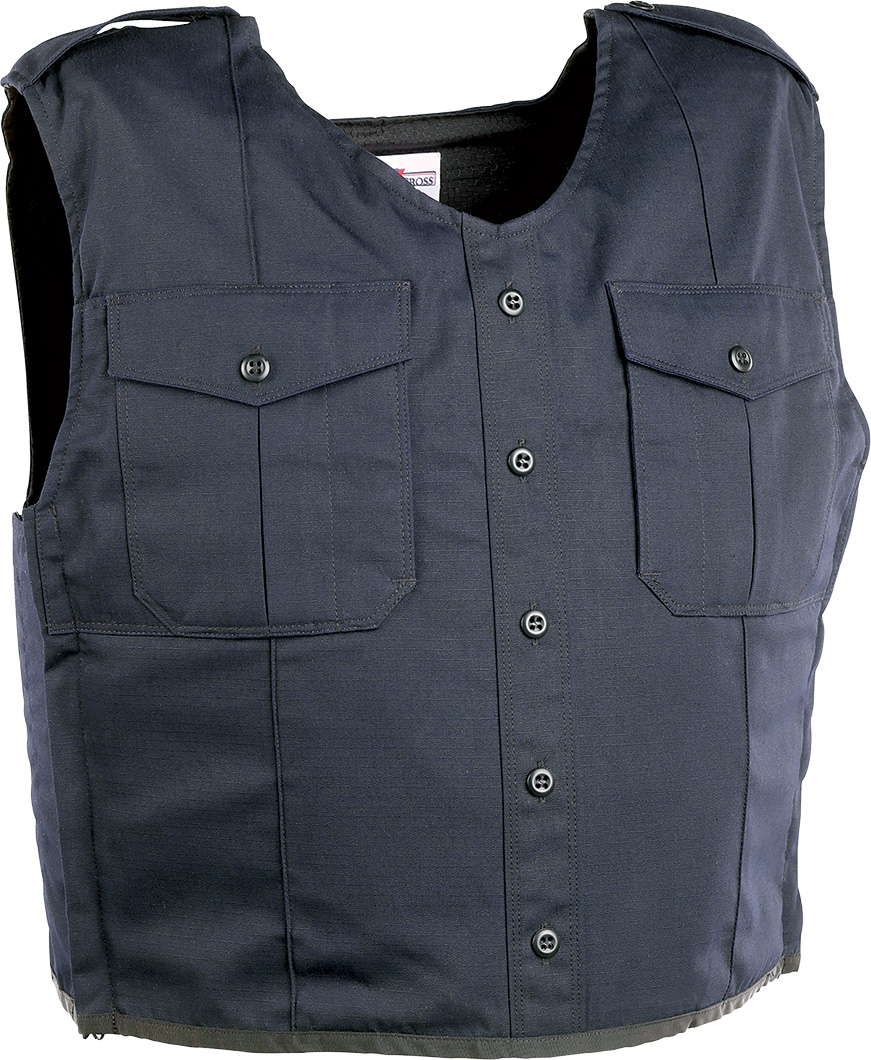
 BALLISTIC BARRIERS
 SAFE TRANSPORT
 POWER PLAY



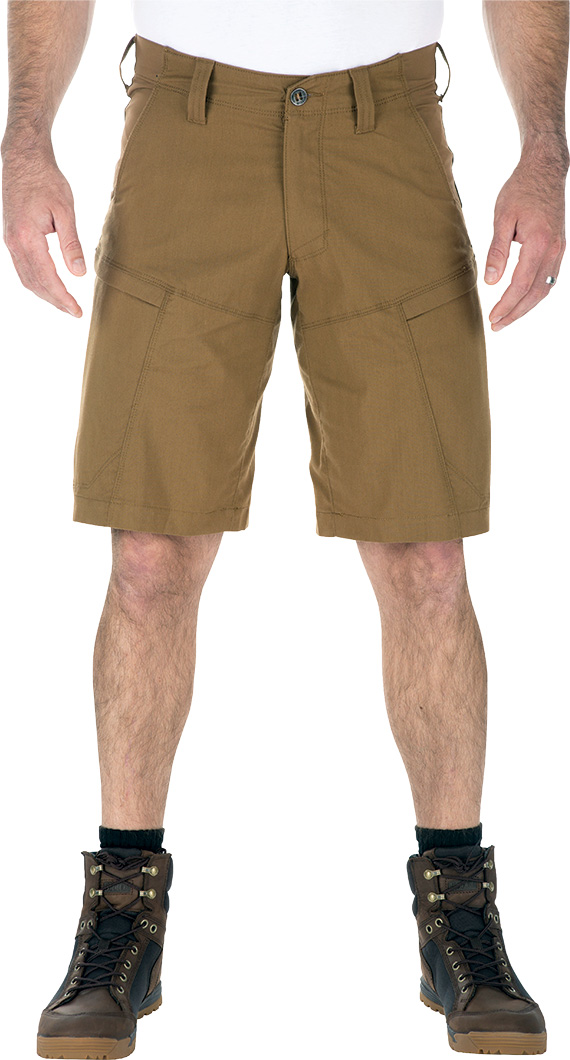 Ideal for tactical, casual or covert wear, 5.11 Tactical’s Apex short is suited to warmer days on duty. Both durable and comfortable, the short is composed of the same 6.4 oz. Flex-Tac mechanical stretch Teflon-treated canvas as its pant counterpart. It also delivers similar functional details, but in a smaller package. There’s ample pocket space and plenty of holders designed for magazines, knives, handcuff keys and other gear. Available in black, TDU green, dark navy, battle brown and khaki. Sizes 28–44. MSRP $69.99.
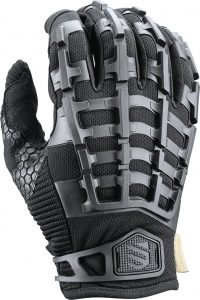 Combining protection and performance, the Fury Prime glove by Blackhawk! is a lightweight and durable option for days when added support is needed for more hands-on duty. The glove is composed of durable synthetic materials, featuring sonic-welded TPR overlay for top-of-hand protection, padding on the thumb and palm to protect against unexpected impact and a silicon grip print on the palm for dexterity. Despite its aggressive and rugged exterior, the glove fits comfortably, like a second skin, and is equipped with touchscreen-compatible fingertips so you can use your cellphone or tablet without having to remove your glove. Available in black, coyote tan and urban gray. Sizes S–XL. MSRP $38.95.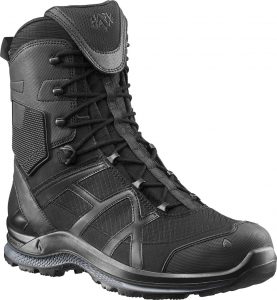

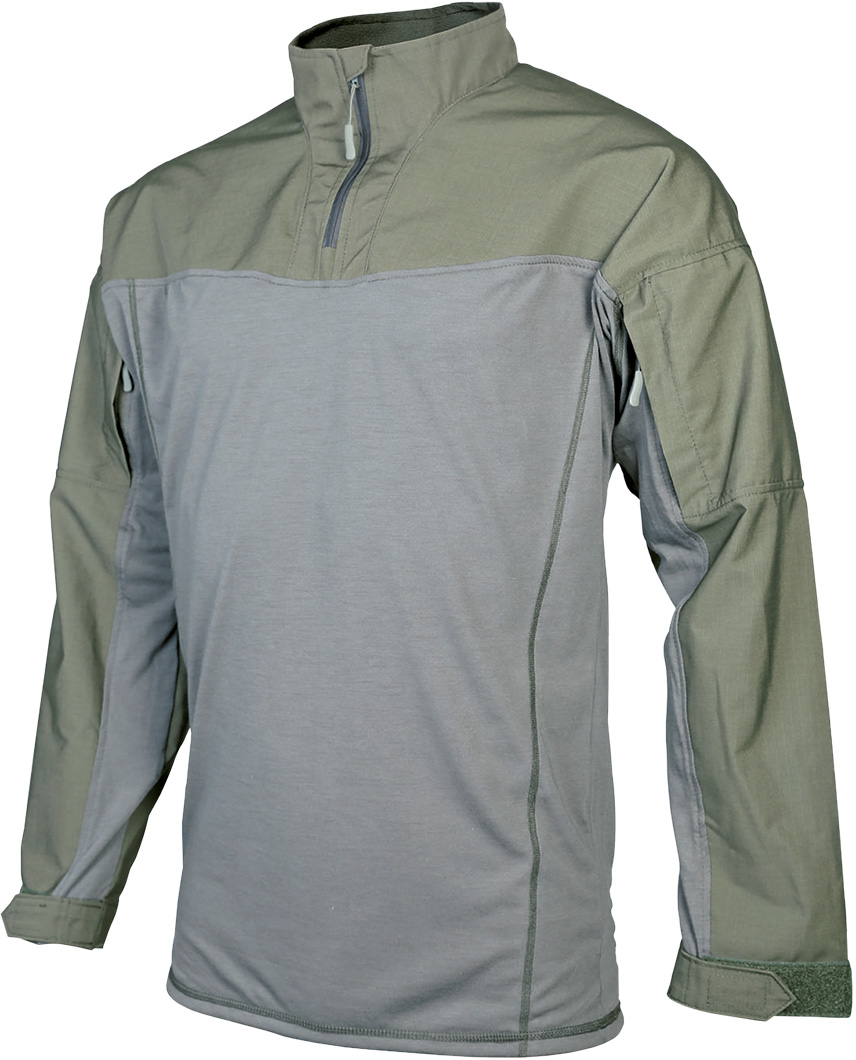
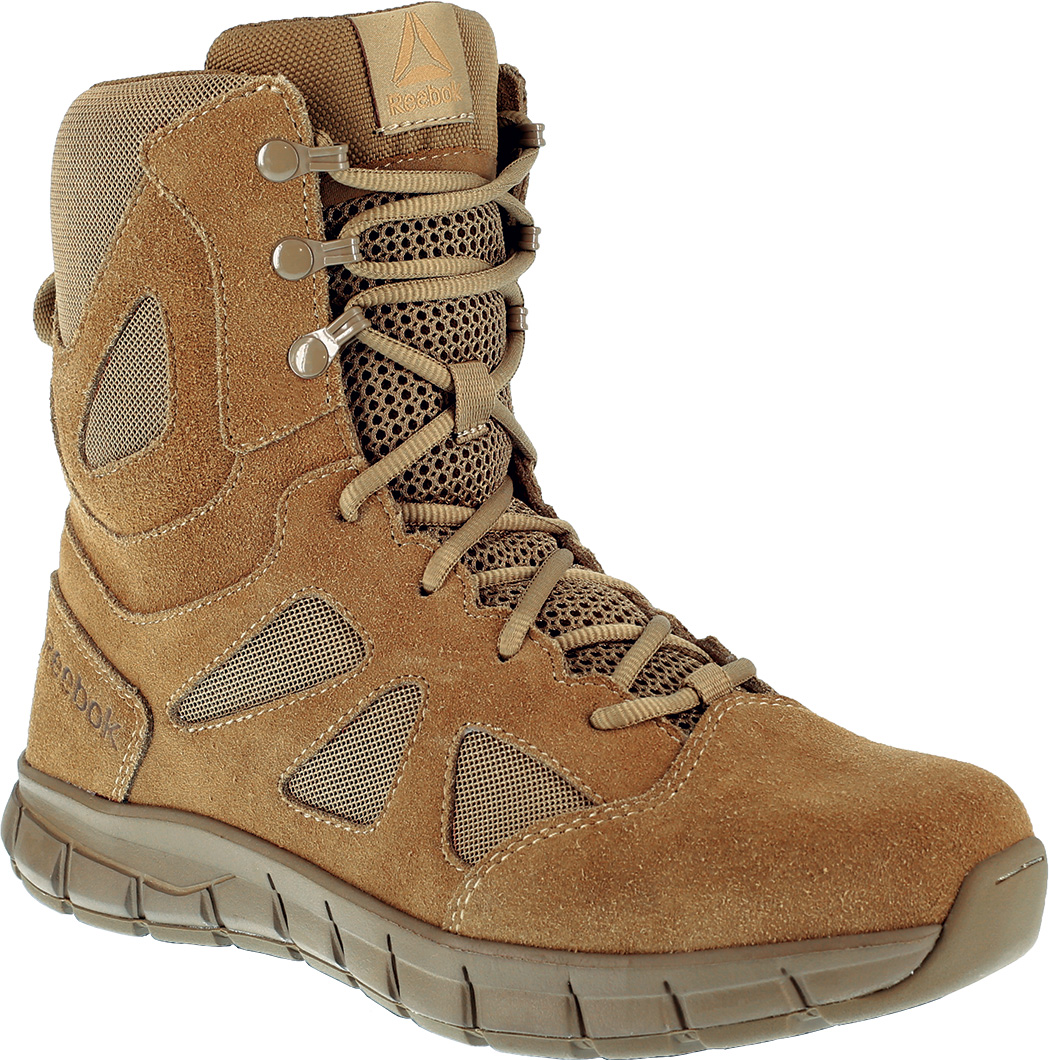 Building on the success of the Reebok Sublite Cushion Tactical series, licensed by Warson Brands, this season the company is introducing its lightweight cushioning technology to military footwear. The new RB8808 tactical boot is available in a coyote brown colorway that meets the Army’s regulations on the wear and appearance of uniforms (AR670-1). Expect the same lightweight and comfortable wear as in previous versions of the boot, made possible by a Sublite foam midsole and MemoryTech massage footbed, but with upgrades. The RB8808 was built with soldiers in mind and features an added lace garage to tuck away laces when blousing pants, a full rubber outsole with rope guard for traction and durability, and an upper made of cattle hide leather for breathability. MSRP $150.